91% of engineering teams are already using it.
This statistic was presented by Anthropic at the “Code w/ Claude” conference in May 2026. Vibe Coding, a concept first mentioned by Andrej Karpathy in 2025, has become the hottest topic in AI programming.
Peking University released a report titled “Agentic Coding: The Evolution from Vibe Coding to Super Individuals,” spanning 105 pages. IT Home highlighted the transition from “writing code” to “generating applications using natural language.”
Many may still feel that AI programming is far from their reach until they see this fact: The barrier to programming has never been the code itself, but the ability to express needs.
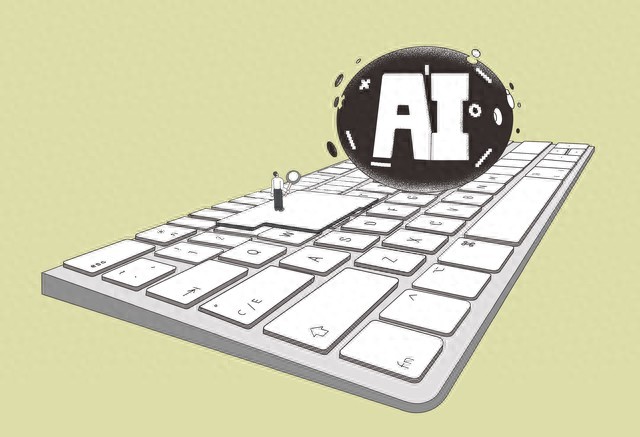
From “Writing Code” to “Describing Needs”
The term Vibe Coding was first introduced by Andrej Karpathy in 2025. Its definition is straightforward: Describe intentions, AI writes code, review results, provide feedback, and guide direction.
The entire coding process involves continuous interaction with AI, with thoughts evolving throughout. Breaking down requirements, writing code, debugging, and testing form a dialogue flow rather than isolated Q&A.
This is completely different from occasionally asking ChatGPT to “help me write a function.” Vibe Coding represents a sustained collaborative model—where the relationship with AI shifts from “Q&A” to “partner.”
A product manager from Baidu’s Xiuda provided an example: users only need to say one sentence—“Help me generate a corporate website,” and the platform can automatically create web applications, H5 pages, mini-programs, or lightweight applications. Digital systems for enterprises (OA, CRM, operation systems), e-commerce mini-programs, and game applications can all be handled using natural language.

This may sound like science fiction, but as of May 2026, it is already in use.
Why Now?
The establishment of Vibe Coding requires two conditions: sufficient AI coding capability and a smooth toolchain.
Before 2025, these two conditions were not met. With the release of Claude Opus 4.6 and GPT-5.4, the first condition was satisfied. By 2026, a low-latency, context-preserving, and smooth toolchain has matured—Claude Code, Cursor, OpenClaw, and Windsurf each serve distinct purposes.
Claude Code is suitable for deep tasks, with a strong understanding of code libraries, capable of executing tasks—running commands, reading and writing files, and running tests. Cursor is ideal for daily completions, with Tab completion predicting actions and Cmd+K/L shortcuts operating smoothly. OpenClaw excels in parallel multitasking, supporting multiple agents, task queues, and custom skills.
Choosing one main tool and mastering it is better than learning two halfway. Domestic users still need to configure API proxies to avoid rate limits interrupting their workflow.
Programming Mindset as Core Competence
Many people’s first reaction to Vibe Coding is: Do programmers still have a place?
This question misses the point.
The essence of Vibe Coding is not to eliminate programmers but to remove the barrier that requires learning a programming language to code. Just as calculators eliminated the abacus without eliminating mathematics; search engines removed the need to memorize all knowledge without eliminating critical thinking.
A poignant statement in the Peking University report reads: In the future, there may be no distinction between workers and bosses, only those who use AI and those who do not.
Examples of one-person companies are emerging. A writer named Kingfisher directed AI to write code using natural language, completing a dating game in two months. Non-technical developers, leveraging AI programming tools, created a prototype of a “cat light” app in one hour.
The anxiety of tech professionals is real: coding skills are no longer scarce. However, from another perspective, programming mindset—clarifying what to do, how to break it down, and how to validate—becomes more valuable.
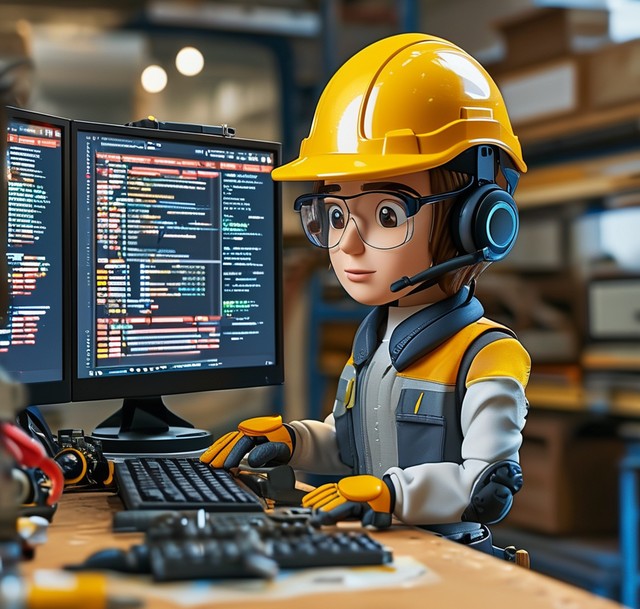
AI Cannot Make Decisions for Us
Vibe Coding has its boundaries.
When Andrej Karpathy proposed this concept, he emphasized the principle of division of labor: Clarify what to do, and let AI assist.
Developers are responsible for directional judgment, deciding whether a feature should be developed, architectural design, and technical debt decisions. AI handles code generation, bug fixing, and test writing.
A common pitfall is treating AI like a search engine, re-establishing context each time, which is inefficient. The correct approach is to clearly describe the task before handing it over, providing complete context.
Another pitfall is submitting code without reviewing it. AI-generated code may have logical flaws or security issues. The correct approach is AI generation → Review key logic → Ask questions for improvement → Confirm.
Relying entirely on AI for decision-making makes systems increasingly difficult to maintain, as no one truly understands the design logic.
It is advisable to create a CLAUDE.md file in the project root directory, detailing the project background, technical decisions, and coding standards. This way, AI-generated code aligns more closely with the project’s reality, eliminating the need for repeated explanations.

The Era of Super Individuals Has Arrived
By May 2026, Vibe Coding has transitioned from concept to reality. IT Home’s special report mentions that for enterprises, AI Coding platforms can lower development barriers and enhance digital efficiency; for individual developers and startup teams, this means reduced startup costs and faster validation speeds.
Peking University’s report refers to this as the “evolution path of super individuals.” One idea + one technology + an AI agent allows entrepreneurs to operate a company independently, truly becoming “super individuals.”
This may sound distant, but it can start today.
There’s no need to wait for a large project. Start with a small tool: something you’ve always wanted to do but couldn’t—an automatic file organizing script, a simple bookkeeping webpage, or a family album mini-program for your parents.
Describe needs, let AI write code, review results.
This is Vibe Coding. The barrier lies not in the code, but in expression. Opportunities lie not in technology, but in creativity.
Action Suggestion: Find a weekend to create a small tool you’ve always wanted but never knew how to make using AI. Don’t aim for perfection; just get it running. This is the starting point for super individuals.
Comments
Discussion is powered by Giscus (GitHub Discussions). Add
repo,repoID,category, andcategoryIDunder[params.comments.giscus]inhugo.tomlusing the values from the Giscus setup tool.